Request from RockSolid for pDAO to consider bridge selection for rETH on Plasma and TAC

Hello fellow Rocket Pool pDAO members,

tldr; we ask the pDAO to support the deployment of rETH to TAC and Plasma chains, including the selection of a bridge, so that the rETH vault can deploy there and earn incentives for depositors, and more generally expand the DeFi utility of rETH.

I’m co-founder of RockSolid, a liquid vault platform that just launched our inaugural vault, the RockSolid rETH Vault in partnership with the Rocket Pool core team.

You can learn more about us here:

You can deposit right from the Rocket Pool front end here https://stake.rocketpool.net/rocksolid/vault/deposit

One of the guiding principles of our personal and company support of rETH is that rETH is good for stake distribution and good for Ethereum. And for rETH to reach its potential, it needs to compete in terms of DeFi utility, liquidity and APR; in addition to the great advantages it has today in terms of decentralization.

On DeFi utility, we want to bring as many new opportunities to rETH holders, especially vault depositors. We’re already out there negotiating new incentives for the ~$8M rETH in our vault, on new chains and protocols. As an example, rETH is now enabled on the canonical Hemi bridge and we will soon deploy there to start farming incentives (Tulipa will post a follow up of the terms)

We, in collaboration with Tulipa, our DeFi strategy manager partner, have also negotiated new incentives for the TAC chain (aiming to bring the EVM to TON) and are working on similar for Plasma (Tether’s new chain).

We’re currently blocked on taking advantage of these opportunities for our depositors and rETH holders more generally.

In order to proceed, we need an rETH deployment and bridging solution. For L2s, it is relatively simple as there is an official, ‘canonical’ bridge, and so enabling rETH on that bridge is not contentious.

For an L1, the chosen bridge needs to have the mint/burn permission on the deployed rETH token and thus takes on a kind of “official blessing”. As a decentralized protocol, that’s something the pDAO needs to weigh in on.

Next steps:

  • pDAO to respond with support, objections, questions etc.
  • Core team to propose specific bridges for TAC and Plasma
  • If sentiment seems supportive, a sentiment poll

Thanks, Paladin.

5 Likes

I support bridging rETH to other L1s, assuming any security risks are largely/entirely borne by users of the other chain (i.e. it doesn’t pose risks to rETH on Ethereum).

5 Likes

+1

let’s do it. agree with ramana.

3 Likes

Very exciting to have you guys on board. I support this as well.

Could you give some potential risks for rETH holders that we should know about? And I mostly mean rETH users that stay in Ethereum ecosystem. If the bridge or chain blows up, is there a risk for the rETH token on Ethereum?

2 Likes

As with the others I’m also in support of this initiative and think it’s a positive development for rETH to be used and recognized in the broader ecosystem even if it means exploring other alt L1s

1 Like

We have reached out to the recommended bridge partners for those chains to understand the process for bridging. We should have more information next week.

I recommend not changing the core rETH contract, but rather choosing a wrapped solution like Chainlink’s CCIP. LayerZero has their OFT suite, but working with that was an absolute nightmare.

Endorse the CCIP one as the official wrapper (and add it to the website), but don’t complicate your life by adding it on the protocol level.

The CCIP team was quite helpful in the calls I had with them (also re:adding new chains).

1 Like

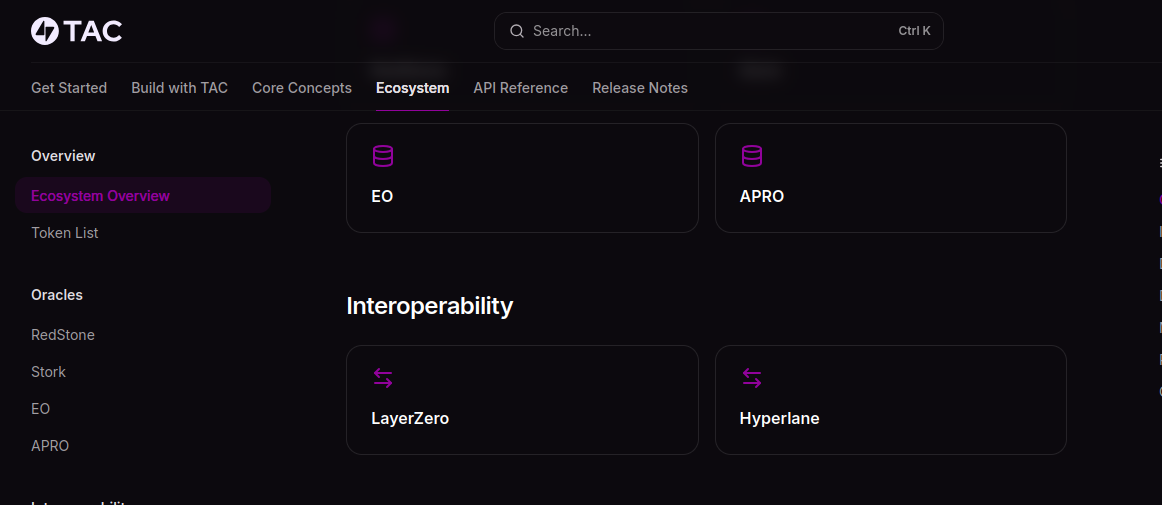
From what we have gathered, Layer Zero (Stargate) is the closest to a canonical bridge for Plasma. It is also one of the official bridges mentioned by the TAC documentation.

Last week we spoke with Layer Zero, about how the bridging would work and it seems very similar to the process we followed with CCIP for Ronin.

  • Deploy token (either us or bridge provider)
  • Set mint and burn to bridge
  • Set owner to 0x0

Like with CCIP we would need to evaluate the trade-offs with setting the owner to 0x0.

CCIP also support Plasma and TAC but they are not officially recognised yet. We are familiar with CCIP and have had great support from them. CCIP is an option but not being officially recognised is an issue for adoption. We can check with Chainlink to see whether they will be in the near future.

What are the communities thoughts on the above?

1 Like

But I noticed that both TAC and Plasma are already listed in the ccip docs and the Transporter app.

Yes, as I said CCIP supports both chains.

Although for Plasma the default bridge from their website is Stargate (Layer Zero): https://app.plasma.to/

For TAC it is a little more open but Chainlink is not mentioned: Ecosystem Overview - TAC

My concern is that it is perfectly natural when bridging, to go to the chain’s website and use the official bridges, in which case, they will not find rETH.

I do think that TAC may add CCIP at some point but Plasma seems to be locked into Layer Zero.

Happy to hear further thoughts on CCIP vs Layer Zero?

I will follow up with both CCIP and Layer Zero about costs to users to double check that.

1 Like

There is no rETH contract on those chains so it would be a new deployment. As I understand it is a standard ERC-20 deployment rather than an OFT but will check.

1 Like

Chainlink have informed me that TAC and Plasma have updated their docs to include CCIP:

After consultation with RockSolid, we have to move on these opportunities very quickly. Some opportunities have already been missed for lack of a bridge to the target chain. This poses a question, to enable rapid deployment to new chains to support yield opportunities, do we just select one bridge provider for all non-rollup chains? Currently, reviewing and selecting bridges for each chain requires time and DAO input. Standardising on one provider would streamline this process significantly.

Happy to hear your thoughts? on selecting a standard bridge provider?

  • Select a standard bridge provider for all non-rollup chains
  • Choose a provider each time we go to a new chain
  • Other, please comment
0 voters

If the DAO are happy to select a standard bridge provider I can arrange for the bridge providers to pitch.

CCIP and Layer Zero the market leaders in this space. Both are well connected and highly secure bridges. The user costs are also similar. Technically, we are most familiar with CCIP and we have already deployed it to Ronin. Layer Zero seems technically similar but the devil may be in the detail as @mentor said.

1 Like

From the RockSolid perspective, we’d much prefer the DAO select a standard bridge provider to use for non-rollup chains going forward. This would allow us to use the rETH liquidity in the vault to negotiate great terms and rewards for our vault depositors in new chains and protocols, which are typically the ones motivated to offer the best terms.

We’ve already missed a few opportunities due to a lack of an rETH bridge for new chains.

Additionally, although the DAO likes to remain as neutral as possible, I see some UX advantage in, for example, having a “Bridge” link on rocketpool.net that either linked out to a bridge (e.g. Transporter for CCIP or Stargate for LayerZero), or integrated as a widget into the website. That way rETH stakers don’t need to think about bridging, it just works.

I won’t comment on the security of LayerZero vs CCIP, other than to say both are well respected and process huge volumes across all of crypto.

Finally, if the DAO already got comfortable with CCIP for Ronin, that may offer the fastest path here, unless there are significant differences between the two solutions the DAO wants to debate.

4 Likes

We already have CCIP for Ronin, so choosing Layer zero would mean having mixed bridges.

For me, only security or maybe commercial considerations would make it worth abandoning CCIP.

3 Likes

LayerZero has shared data on value flow to Plasma and TAC to support their case for selection:

Plasma:
-$18B inflow
-$10B outflow
-24 apps, 25k users, 28 OFTs
Source: https://dune.com/layerzero/layerzero?Chain+Analyzer+Chain+Name_e0f5bb=Plasma

TAC:
-$298M inflow
-$435M outflow
-15+ apps, 2k+ users, 19 OFTs
Source: https://dune.com/layerzero/layerzero?Chain+Analyzer+Chain+Name_e0f5bb=Tac

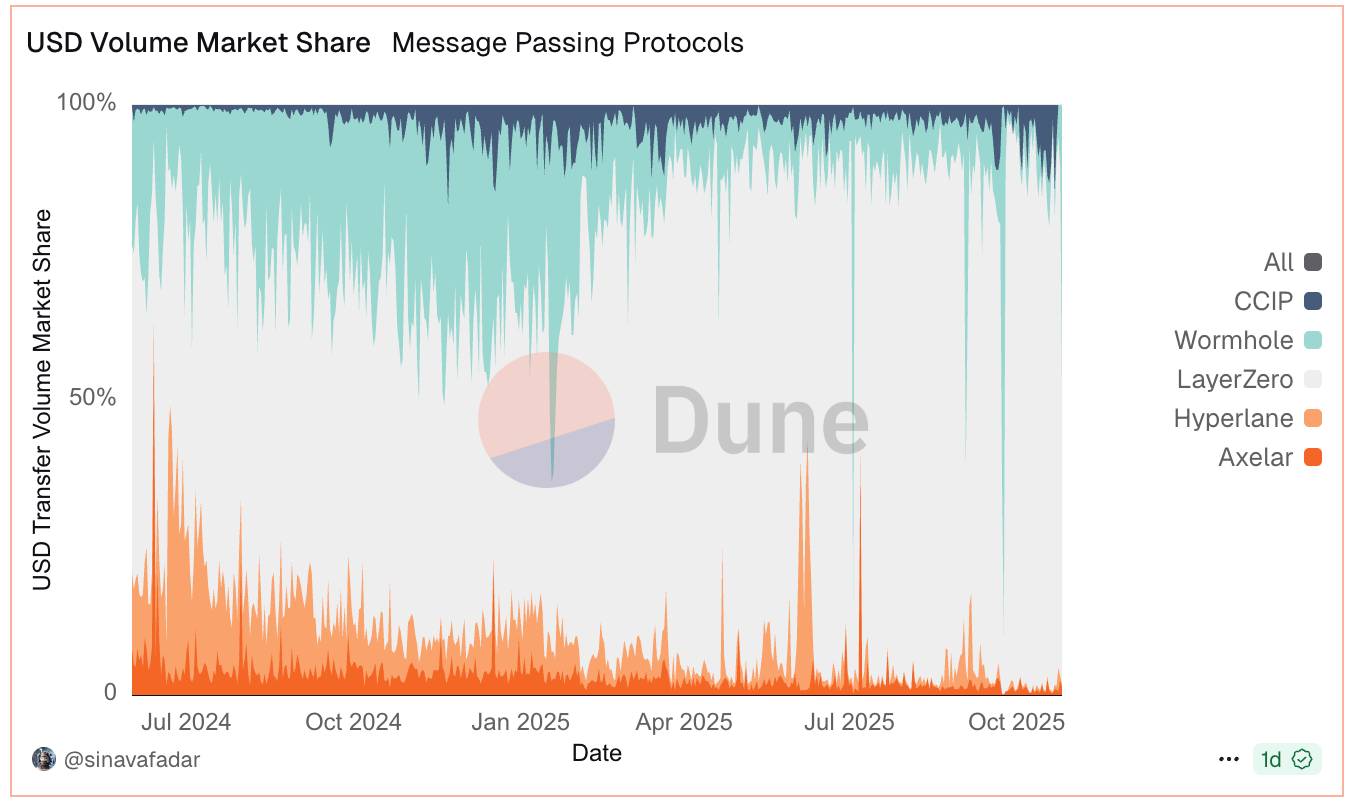
To put that into context, we have moved 15x more value on Plasma alone ($28B) than all of CCIP ALL TIME across ALL CHAINS ($2B)
Source: https://dune.com/linkpool/chainlink-ccip

This poll is to choose the standard default bridge provider for non-rollup chains:

  • Select Chainlink (CCIP)
  • Select Layer Zero (Stargate)
0 voters

Hey everyone, Luke from Chainlink Labs here to share our proposal for a bridging partnership with Rocket Pool. Over the past few years, we have been collaborating closely with Rocket Pool across technical support of rETH data feed oracles, bridging between Ethereum and Ronin, and other growth initiatives including introductions to leading blockchains. The shared focus on security and decentralisation between the Rocket Pool and Chainlink communities has driven massive shared success, and we’re excited at the opportunity to grow this further.

Abstract

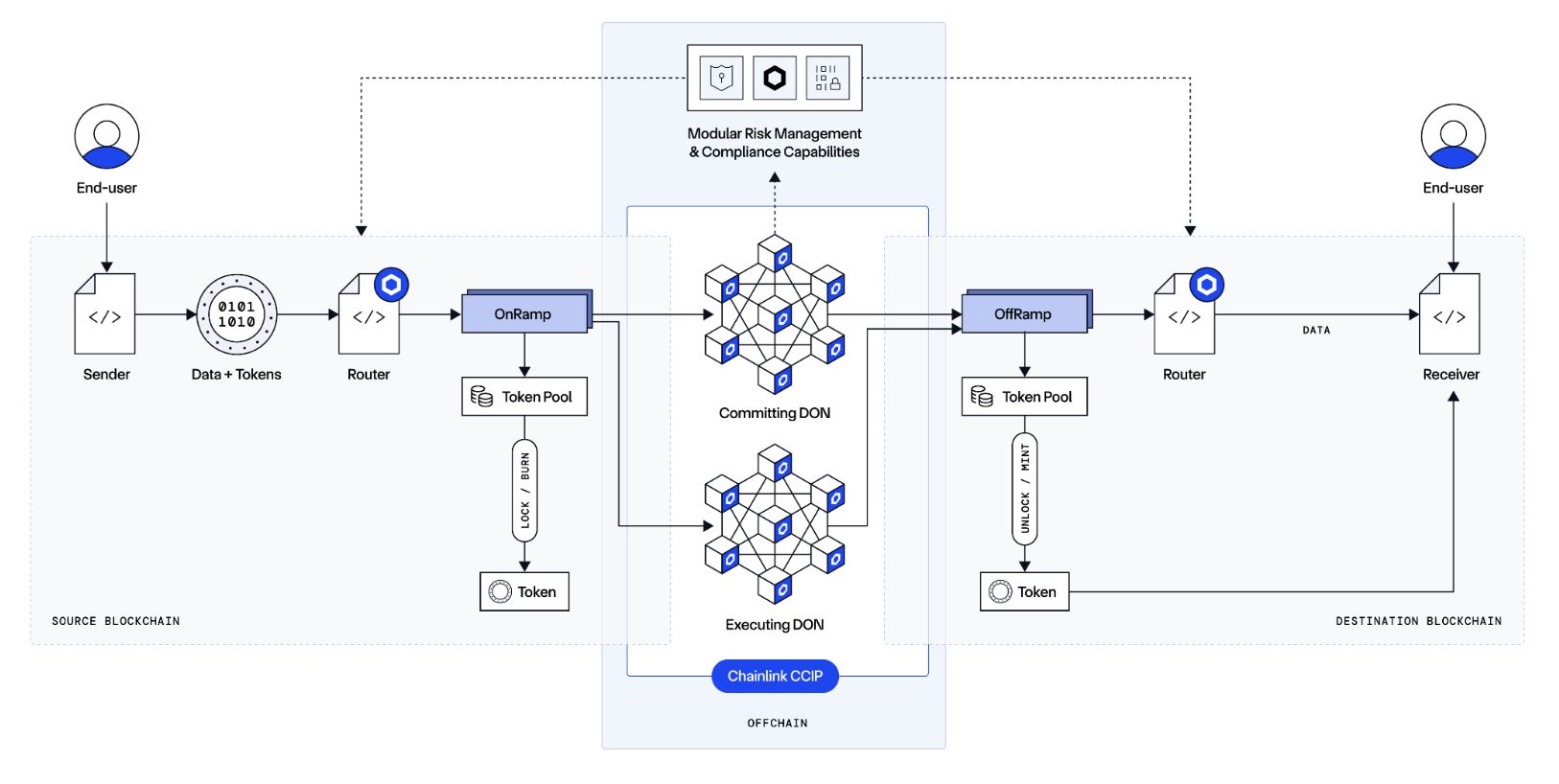
This proposal aims to make the Chainlink Cross-Chain Interoperability Protocol (CCIP) the canonical bridge for Rocket Pool to enable native cross-chain rETH transfers to non-rollup chains. Underpinned by the same Chainlink infrastructure that has already enabled tens of trillions in onchain transaction value and secures nearly $100B in value, Chainlink CCIP features the highest level of cross-chain security thanks to its time-tested oracle infrastructure, multiple layers of decentralization, Token Developer Attestation feature, high-quality node operators, highly audited codebase, and additional security features such as rate limiting and timelocked upgrades.

As a key long-time partner, Chainlink has supported the growth of Rocket Pool by providing high-quality, decentralized market data through Chainlink Data Feeds and bridging over $96M of rETH since May 2025. Integrating CCIP across all non-rollup chains would deepen the alignment between the Rocket Pool and Chainlink ecosystems, with Rocket Pool benefitting from the fact that adopting CCIP would not introduce additional trust assumptions or vendor risk due to Rocket Pool’s ongoing usage of Chainlink Data Feeds and CCIP on Ronin. Through our established relationship, Chainlink is well-positioned to accelerate Rocket Pool’s multichain expansion. CCIP delivers the secure cross-chain connectivity required for non-rollup environments, driving the growth of Rocket Pool and increasing CCIP’s transaction throughput.

Chainlink CCIP Is Trusted By Major Financial Institutions and DeFi
Chainlink has strategic partnerships with some of the world’s largest financial institutions, market infrastructure providers, and enterprises to securely facilitate the cross-chain settlement of tokenized assets across public/private chains via CCIP. This includes work with Swift (interbank messaging standard for 11,500+ global banks), ANZ ($1 trillion+ assets under management), Banco Central do Brasil (Brazil’s Central Bank), and more.

Also, more than 190 DeFi and other protocols have adopted CCIP for cross-chain token and/or data transfers. Chainlink’s deep roots in DeFi are reflected in protocols adopting both its data solutions and CCIP, minimizing trust assumptions by using battle-tested Chainlink DONs.

These protocols include:

  • Aave, the leading DeFi lending market with $40B+ in TVL, uses Chainlink Price Feeds and integrated CCIP to support its multi-chain expansion by enabling cross-chain governance and native cross-chain transfers of its GHO stablecoin.

  • Lido, with $35B+ in TVL, launched Direct Staking, a CCIP-powered cross-chain staking solution that enables users to stake their ETH and receive wstETH directly on L2 networks.

CCIP was developed with security and reliability as the primary focus by some of the industry’s leading academic researchers.

High-Quality Node Operators

Chainlink DONs are operated by a geographically distributed collection of Sybil-resistant, security-reviewed node operators with significant experience running mission-critical infrastructure across Web2 and Web3. Node operators in the Chainlink ecosystem include global enterprises (e.g., Deutsche Telekom MMS, Swisscom, Vodafone), leading Web3 DevOps teams (e.g. Infura, Coinbase Cloud), and experienced Chainlink ecosystem projects.

Full Support for Plasma and TAC

Chainlink CCIP is live on both Plasma and TAC blockchains, enabling native cross-chain transfers of rETH across the multi-chain DeFi ecosystem.

User Experience: Enabling Fast, Seamless Transactions Without Complexity

CCIP powers a growing number of token bridging applications, including Interport Finance, OpenOcean, Transporter, XSwap, Jumper, and other Li.Fi-enabled front ends, such as Rabby, Metamask, and Phantom. These frontends provide users with a seamless experience to transfer rETH to any destination chain that CCIP is integrated with.

In order to maximise security, CCIP waits for finality on the source blockchain, which is crucial when transacting across multiple networks to ensure actions taken on the destination blockchain are based on transactions on the source blockchain that are extremely difficult or impossible to revert. The time to achieve finality varies across blockchains and impacts the total CCIP execution latency. Further details on the end-to-end lifecycle of CCIP transactions can be found in the developer docs. Notably, CCIP transfers for L2 networks are significantly faster than the native bridge, which for certain rollups can take up to seven days to complete.

Audits and Source Code

Security is the number one priority for Chainlink. We have put an immense amount of resources into developing the security model of CCIP. The onchain and offchain code for CCIP has undergone a total of 53 independent audits by eight leading security firms—Cure53, Dedaub, NCC Cryptography Services, Sigma Prime, Trail of Bits, Halborn, Zellic, and OpenZeppelin—in preparation for the initial mainnet launch and subsequent deployments.

Copies of all completed independent audit reports will be provided separately for review. Additionally, four crowdsourced audits of CCIP have been conducted on the Code4rena and CodeHawks platforms:

  • CCIP

  • CCIP Administration Contracts

  • CCIP v1.5

  • CCIP v1.6

All valid findings were remediated and fixes confirmed with the respective auditors. In some cases, findings represented expected behaviors and were reviewed with auditors upon receipt of audit reports.

We also publish the onchain source code for CCIP in full transparency and it is publicly viewable on GitHub:

Finally, CCIP is covered by the Chainlink bug bounty program on Immunefi, with a $3 million maximum bounty for critical smart contract vulnerabilities.

Conclusion

This proposal is a statement of commitment as a growth partner of Rocket Pool. The use of CCIP across non-rollup chains would build upon Rocket Pool’s existing use of Chainlink Data Feeds across DeFi and the use of Chainlink CCIP across Ethereum and Ronin, without introducing additional trust assumptions for users, as it operates on the same battle-tested Chainlink infrastructure that already secures hundreds of billions in DeFi TVL and has enabled tens of trillions in onchain transaction value.

We’re happy to address questions, comments, clarifications, and feedback.

3 Likes

Tulipa Capital supports RocketPool’s endeavor to make rETH more widely accessible across these emerging ecosystems; Therefore, adoption of cross-chain infrastructure is vital to this cause. In order to preserve the ethos of RocketPool the provider should uphold the following criteria: security, reliability, composability, and a trust-minimized design.

Our View

Through careful analysis, we endorse Chainlink’s CCIP for the following reasons:

  1. Proven Architecture & Operational Integrity

Chainlink’s CCIP has demonstrated exceptional uptime and verifiable performance across multiple integrations, including RocketPool’s existing Ronin deployment. CCIP’s architecture utilizes decentralized oracle networks combined with an independent risk management layer, ensuring robust operational integrity. This structure maintains rETH’s backing and accuracy across non-Ethereum environments without introducing unnecessary trust assumptions.

  1. Rapid Deployment

RocketPool currently utilizes CCIP which will simplify the proposed integrations and all future integrations for the team. Furthermore, the architecture of CCIP allows rETH to maintain the security standard of Ethereum on alternative chains. CCIP partners will immediately be able to deploy rETH’s pricing through their oracles allowing users to quickly take advantage of opportunities on TAC & Plasma.

  1. Composability & Alignment

CCIP maintains token uniformity across all supported chains and mitigates the risk of fragmentation. This ensures that rETH remains a single, interoperable asset across all protocols on any chain. Once again, utilizing CCIP will further its adoption across the Ethereum ecosystem reinforcing the adoption across more protocols creating a positive feedback loop resulting in higher utility in the future.

Conclusion

Tulipa Capital supports the adoption of CCIP as the primary bridge infrastructure for RocketPool for TAC, Plasma, and all future integrations. It maintains all security requirements while providing the most value to users in the short order while strategically positioning for future growth.

Standardization on CCIP will allow RocketPool and its partners to move quickly on new opportunities without sacrificing decentralization or trust, ensuring rETH remains the most secure and composable liquid staking token across DeFi.

1 Like

Rocket Pool x LayerZero - Partnership Proposal

The purpose of this document is to highlight LayerZero’s commitment to working with innovative protocols that are continuing to push the space forward. LayerZero views Rocket Pool as an incredibly impactful and innovative DeFi protocol, and is committed to unlocking new opportunities for Rocket Pool and its community across chains. LayerZero is committed to designing, developing, and structuring successful crosschain product solutions alongside go-to-market campaigns. Under the current proposal, the immediate priority is to enable rETH deployment to TAC and Plasma chains, allowing the rETH vault to launch there, earn depositor incentives, and enhance the token’s DeFi applications. We have also included two additional optional workstreams that we believe would be extremely beneficial to the Rocket Pool ecosystem.

LayerZero’s world-class developer experience, battle-tested protocol contracts, permissionless security stack, and unparalleled chain support (140+ chains) have made it the leading choice for all DeFi builders. With over 500 of the strongest teams and $150B+ in assets leveraging the protocol in production today, LayerZero has become the backbone of DeFi interoperability. As a testament to the above, GMX recently voted via a public governance proposal to choose LayerZero as their official bridge and messaging partner.

Proposed WorkStreams

  • As part of our commitment to Rocket Pool, LayerZero will co-design and co-develop crosschain solutions with Rocket Pool to ensure a best-in-class crosschain user experience; including but not limited to white glove design of rETH OFT as well as optional solutions listed as additional workstreams.

    • Workstream 1: rETH OFT for Plasma and TAC (plus the continued development of the rETH OFT to future LayerZero supported chains) with listing on the Stargate Finance frontend

    • Workstream 2: [Optional] - Fast Swaps - enables gasless crosschain swaps that fill with sub-one-second finality. Option to discuss integration for rETH across all future rETH OFTs with listing on Stargate Finance frontend. (See appendix for details on Fast Swaps integration for rETH)

    • Workstream 3: [Optional] - OVault - Create an omnichain ERC-4626 vault that enables users to deposit rETH or redeem shares on any blockchain network through a single transaction. (See appendix for details on rETH OVault implementation and design)

  • With LayerZero’s developer resources, the Rocket Pool team can feel confident their products/solutions will be shipped instantly, with no delays.

Security

  • Guaranteed Trust-Minimization: LayerZero’s immutable smart contract logic dramatically reduces vulnerabilities inherent in protocol upgrades and central points of control—critical for rETH adoption across chains

  • Reduced Risk of Exploits: The immutability model safeguards Rocket Pool from malicious manipulation or external attacks by limiting the surface area of possible attack vectors and enforcing strict adherence to predetermined, audited logic

  • Increased DeFi user Confidence: Immutable security assurances enhance user and institutional confidence, attracting deeper liquidity pools and facilitating greater usage of rETH across chains

LayerZero in Market

  • Access to $150B+ of assets within the LayerZero ecosystem

  • A network of 500+ strong partners to strategically collaborate with

  • Access to millions of users through the largest front-facing bridge in crypto, Stargate.Finance

  • A dedicated GTM team to spearhead the growth of rETH across desired ecosystems today and into the future

  • LayerZeroScan can be referenced for more data

LayerZero’s Commitment to Build

LayerZero is home to the industry’s top engineers who have collectively white-gloved or meaningfully supported every integration built on top of LayerZero. Our devotion to partners is reflected in examples such as developing the custom SyncPools solution for EtherFi’s Native L2 Restaking Module and Plasma’s launch with deep liquidity, driving over $8B of asset flow in just the first couple of days.

LayerZero Presence on TAC and Plasma:

Plasma:

  • $18.9B inflow
  • $11B outflow
  • 24 apps, 25k users, 28 OFTs

To put these flows into context, LayerZero has moved ~15x more value on Plasma alone ($28B) than all of CCIP all time across all chains ($2B)

TAC:

  • $301M inflow
  • $442M outflow
  • 15+ apps, 2k+ users, 19 OFTs

LayerZero Security

What LayerZero means for Rocket Pool and the Rocket Pool community in terms of security is that its users get the same immutable, battle-tested solution that has transferred over $170B+ lifetime. For a protocol as large and critical as Rocket Pool in DeFi, choosing the most secure and battle-tested solution is of utmost importance.

For Rocket Pool specifically, adopting LayerZero reinforces a commitment to mitigate risks associated with crosschain exploits and reduce attack vectors that appear in centralized, upgradeable systems. LayerZero’s core contracts being entirely immutable coupled with a completely permissionless security stack directly supports user confidence, enabling Rocket Pool to attract a larger, more risk-averse user base and encouraging institutional adoption.

LayerZero’s foundational security approach towards immutability, permissionlessness, and censorship resistance ensures application sovereignty and has allowed the protocol to attract over 70% of the entire crosschain market without a single instance of a protocol exploit. LayerZero utilizes Security Stacks in the form of configurable sets of Decentralized Verifier Networks (DVNs), facilitating application-tailored security by verifying its crosschain messages. Within LayerZero, DVNs are a permissionless role, enabling any entity capable of verifying crosschain data packets to participate in the security process for crosschain flows. LayerZero’s modular design allows for flexibility in DVN selection for each application, preventing vendor lock-in at the security level.

We have already engaged our DVN partners and have hand-selected a set that are excited to support rETH interoperability (these of course are just suggestions and Rocket Pool can choose whoever they want): Nethermind, P2P, and Deutsche Telekom.

LayerZero is purpose-built using immutable protocol contracts. There is no centralization risk in the protocol itself since no governing entity can change the core functionality of such contracts. All trust assumptions of the LayerZero protocol are the same in perpetuity.

By combining DVNs, application owners can optimize their crosschain message/transfer verification models according to specific characteristics such as security, cost, speed, or other parameters relevant to the application’s individual needs, rather than a one-size-fits-all fixed security approach. Presently, there are over 50 DVNs available, including those operated by Google, Nethermind, P2P, Deutsche Telekom, Paxos, BitGo, LayerZero Labs, and others. Because of this modular design, Rocket Pool can actually utilize Chainlink CCIP as a DVN Adapter within LayerZero, ensuring that there is no fragmentation in the bridging experience for rETH.

LayerZero in Market

LayerZero is the largest interoperability protocol in crypto in terms of the dollar volume of assets transferred, number of assets secured by the Omnichain Fungible Token Standard, and the number of LayerZero contracts currently live in production (50,000+).

LayerZero powers the largest asset issuers in the space today. Furthermore, LayerZero powers Stargate, the largest retail-facing bridge front end with millions of users. All OFT / LayerZero assets have the option to be listed here for ultimate distribution and access.

Key OFT Assets

  • BitGo Wrapped Bitcoin (WBTC) - LayerZero has enabled BitGo to extend WBTC to 10+ chains, allowing them to quickly reach any ecosystem they desire

  • Ethena USDe/sUSDe/USDtb/ENA - This basket of Ethena assets has a present-day crosschain transfer volume of over $17 billion in total, highlighting the adoption and utility of the asset

  • USDT0 - Tether and USDT0 collaborated with LayerZero to co-build complete interoperability across new and existing chains. To date, users have bridged more than $37 billion in USDT0 across chains using the OFT standard

Other High-Usage OFTs

Stablecoins

Ondo USDY, PayPal PYUSD, Paxos USDG, Frax frxUSD, Usual Money USD0, Resolv USR, Curve crvUSD, Wyoming Stablecoin FRNT, Reservoir rUSD, srUSD, Level lvlUSD, Avalon USDa, Elixir deUSD, Anzen USDZ, Mountain Protocol wUSDM, Angle Protocol USDa, Agora AUSD, and more

Major Assets & LST/LRTs

Lorenzo stBTC, Function FBTC, Solv solvBTC, Pump pumpBTC, Borderless Bitcoin BTC.B, Lombard LBTC, Lido wstETH, EtherFi weETH, Mantle cmETH, Kelp rsETH, Swell rswETH, YieldNest ynETH, Frax sfrxETH, and more

Governance & Gas Tokens

Aptos APT, Sonic S, Sei Network SEI, Ethena ENA, Plume Network PLUME, Apechain APE, Pendle PENDLE, Euler Finance EUL, Syrup SYRUP, PancakeSwap CAKE, AltLayer ALT, CoreDAO CORE, Clearpool CPOOL, Avalon AVL, Stargate STG, Frax FRAX, Pengu PENGU, Astar ASTAR, MetisDAO METIS, Virtuals Protocol VIRTUAL, Parallel PRIME, Usual USUAL, LayerZero ZRO, Stargate STG, and more

Appendix:

Optional Workstream 1: Fast Swaps

Fast Swaps enables gasless crosschain swaps that fill with sub-one-second finality. Rocket Pool would have the option to discuss integration for rETH across all future rETH OFTs with listing on Stargate Finance frontend.

LayerZero has spent the last 12 months designing and building this intents-based framework for swaps with Aori - the company behind world class high frequency intent execution infrastructure. Transactions are:

  • One click

  • Gasless

  • Sub-second quoting and single-second execution

  • No slippage

  • MEV-resistant

  • No block delays

  • Deep liquidity provided by LayerZero

  • Orders are created & matched off-chain instantly

Optional Workstream 2: OVault for rETH

Option to discuss integration of a Rocket Pool OVault:
OVault creates an omnichain ERC-4626 vault that enables users to deposit rETH or redeem shares on any network through a single transaction.

OVault is a set of contracts that enables crosschain deposits & redemptions of deposit tokens, with receipt tokens automatically received by the user on whichever chain they prefer. This is mainly accomplished via a LayerZero Composer contract that is completely modular, with no changes needed to the protocol’s core contracts.

Why teams are choosing OVault:

  • More liquidity: Users on any EVM and non-EVM chain can directly deposit into and redeem out of Rocket Pool vaults

  • Streamlined UX: One click to deposit/redeem from any chain; no bespoke bridging or wrapper contracts

  • Composability: Vault shares are OFTs (extension of ERC20 tokens) that can be used in other DeFi protocols

  • Operational safety: Simple error handling via retry/refund mechanisms

  • Zero protocol changes: The OVault composer requires zero changes to a protocol’s contracts or internal vault operations (i.e. completely modular)

How this could work for Rocket Pool:

Deposit Flow: A user initiates a deposit of rETH from their source chain. Using LayerZero messaging, the system either burns/mints (if the rETH is implemented as an OFT) or locks/unlocks (if using a bridging vault model) the asset to the destination chain where the Hub 4646 contract resides.

Once the rETH reaches the Hub chain, the OVault Composer interacts with the yield source—calling deposit() for ERC4626 vault integrations. In return, yield-bearing tokens (e.g. vault shares) are minted to the Composer contract. The Composer then wraps these yield-bearing tokens as OFT representations, and the user receives corresponding OVault OFT shares on any chain they choose—representing their proportional ownership in the rETH vault yield position.

Redemption Flow (inverse of deposit): The user sends their OVault OFT shares (representing rETH yield-bearing tokens) from their source chain to the chain hosting the market. The Composer calls redeem() for ERC4626 vaults to unwind the position on Rocket Pool, receiving the originally-deposited underlying rETH tokens. These rETH tokens are then bridged back to the user’s designated network—either the source chain or another supported chain of their choice—completing the redemption process.

3 Likes